15 Must-Have VoIP Features for Smart Business Growth in 2026

Is your current phone system helping your business grow or slowing it down? In today’s fast-moving and connected world, traditional phone systems are no longer enough. Businesses need smarter communication tools that adapt to how teams work, especially with remote work, flexible hours, and rising customer expectations.
This is where VoIP (Voice over Internet Protocol) phone systems come in. These cloud-based phone services go beyond making and receiving calls. They offer powerful features that help teams stay connected, improve customer service, and boost overall productivity.
Basic Customer Handling
1. A Dedicated Business Phone Number
Using a personal phone number for business communication can quickly become overwhelming and unprofessional.
A modern VoIP platform should give you a dedicated business number that helps separate work from personal calls. It also builds trust with customers by presenting a consistent and recognizable contact point.
This makes your communication feel more structured and credible from the very first interaction.
2. Inbound & Outbound Calling from Anywhere
Cloud-based VoIP systems allow your team to make and receive calls from anywhere using their mobile phone or desktop.
This flexibility ensures your team can stay connected whether they’re working remotely, traveling, or in the office — without needing traditional desk phones or hardware.
3. SMS Business Messaging
Customers today often prefer texting over calling for quick updates or confirmations.
VoIP platforms with built-in SMS capabilities allow your team to send:
Appointment reminders
Follow-ups
Quick responses
Service updates
All from the same system used for calls.
4. WhatsApp Messaging Integration
Many businesses communicate with international customers who rely heavily on WhatsApp.
VoIP platforms that integrate WhatsApp make it easier to manage these conversations professionally without needing separate devices or personal accounts.
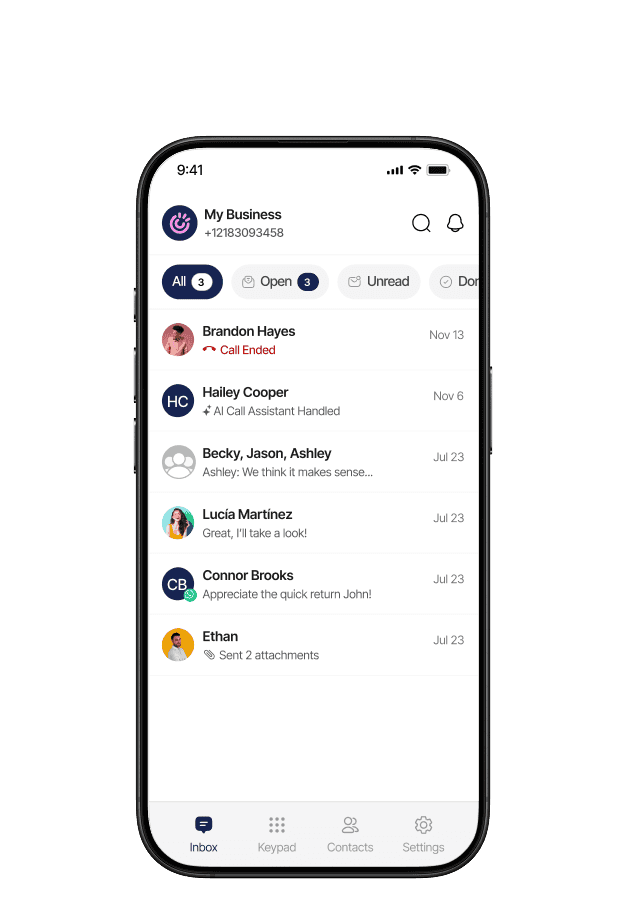
5. A Unified Conversations Inbox
Handling calls in one place and messages in another can slow your team down.
A unified inbox brings calls, SMS, and WhatsApp conversations together in one thread, allowing your team to view the entire communication history with a customer in one place.

AI and Automation Tools
6. AI Call Assistant
Missing calls can mean missing potential leads.
AI-powered call assistants can answer incoming calls, capture basic information, and route callers appropriately — even outside business hours — ensuring your business remains accessible at all times.
7. Call Recording
Call recording helps businesses maintain quality control and improve communication.
Recorded conversations can be reviewed for training purposes, compliance requirements, or to better understand customer needs and feedback.
8. Automatic Call Transcription
Instead of replaying long recordings, automatic transcription converts calls into searchable text.
This makes it easier to revisit important details from past conversations without spending time listening through entire calls.
9. AI-Generated Call Summaries
AI-generated summaries provide a quick overview of what was discussed during a call.
They highlight key points, customer concerns, and decisions made — helping your team stay aligned without manual note-taking.
10. Smart Follow-Up Suggestions
Some VoIP systems can suggest next steps after a conversation, such as scheduling a meeting or sending additional information.
This helps ensure timely follow-ups and reduces the chances of missed opportunities.
11. AI Messaging Assistance
AI-powered messaging tools can help draft replies, adjust tone, and correct grammar in customer communications.
This keeps responses professional and consistent across your team.
12. Conversation Intelligence Search
Advanced VoIP platforms allow you to search across calls and messages to quickly find past information.
This is especially useful for recalling customer requests or reviewing previously agreed timelines.

Team Collaboration Features
13. A Shared Team Inbox
As your business grows, multiple team members may need access to customer conversations.
A shared inbox allows your team to collaborate effectively and respond without confusion or overlap.
14. Internal Tagging & Team Mentions
Internal tagging features allow team members to collaborate within a conversation thread.
This makes it easier to assign tasks, ask for input, or bring another teammate into a discussion when needed.
15. Built-In Translation
Built-in translation tools allow your team to communicate with customers who speak different languages.
This makes it easier to support a global customer base without relying on additional software.

Conclusion
VoIP phone systems are more than just modern replacements for landlines. They come packed with features that support how businesses work today. From call management tools like forwarding and hold to smart features like AI summaries and Team collaboration, these systems give your team what they need to serve customers better.
The best part? These features do not require complicated setup. Most VoIP providers offer user-friendly dashboards that let you manage everything from one place. You can start small with basics like call forwarding and voicemail and grow into advanced tools as your business grows.
Whether you run a small business or a growing company, choosing the right VoIP features can make a big difference. They help you stay flexible, responsive, and professional in every interaction. Your phone system should work for your business, not against it.
By building your communication system around these core features, you create a foundation for stronger customer relationships, better teamwork, and long-term growth in 2025 and beyond.
Related Articles